Did You Know?
Many wildlife biologists do not keep traditional 9-to-5 hours. Some work through the night wearing night-vision goggles or infrared equipment, because the nocturnal animals they study, like owls, bats, and bobcats, are most active after dark.
The Numbers Behind the Career
The median annual salary for zoologist and wildlife biologists was $76,780 in 2025.
About 19,500 zoologist and wildlife biologist were employed across the United States in 2025.
About 1,400 openings for zoologist and wildlife biologist are projected each year over the next decade.
Where This Career Is Headed
Technology is transforming wildlife biology, letting scientists monitor animals and ecosystems on a scale that was impossible a decade ago. Artificial intelligence now helps researchers sort through millions of camera trap photos, satellite images, and audio recordings to identify species and detect population changes far faster than a person ever could by hand. At the same time, climate change is reshaping habitats and migration patterns, pushing biologists to study how animals adapt to a rapidly shifting world. Over the next decade, wildlife biologists will need to pair traditional fieldwork with growing comfort in data science, remote sensing, and conservation technology.
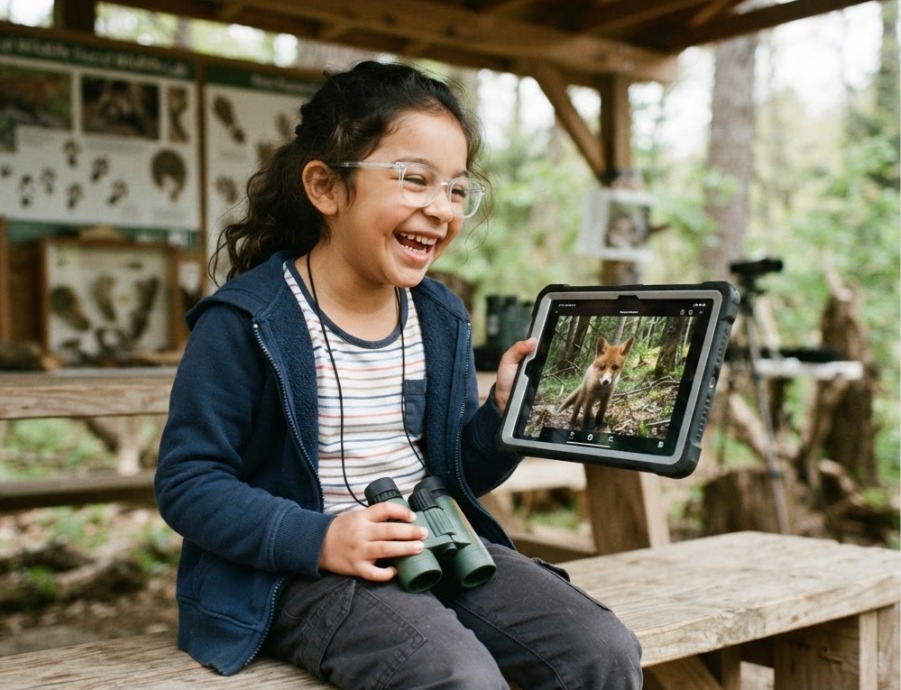
AI-powered image and sound recognition tools are helping wildlife biologists process massive amounts of camera trap and acoustic monitoring data, freeing up time for fieldwork and analysis.
Drones and satellite tracking are opening new ways to study animals in remote or dangerous habitats without disturbing them.
Growing public concern about climate change and biodiversity loss is increasing funding and support for conservation research and wildlife protection programs.
Education & Certification
Most wildlife biologists begin with a bachelor's degree in wildlife biology, ecology, zoology, or a related environmental science field, with coursework in biology, statistics, and increasingly GIS (digital mapping) technology. Entry-level field positions, such as research technician or field assistant roles, are often available to those with a bachelor's degree, though many wildlife biologists pursue a master's degree to lead their own research or qualify for advanced government and university positions. A Ph.D. is typically expected for university faculty jobs or senior research scientist roles. Formal state or national licensure is not usually required to work as a wildlife biologist, but credentials like the Certified Wildlife Biologist designation offered by The Wildlife Society can strengthen a resume and demonstrate professional expertise.
To Prepare:
Take biology, chemistry, environmental science, and statistics courses to build the scientific foundation wildlife biology programs expect.
Look for volunteer opportunities with local nature centers, parks, or wildlife rehabilitation organizations to gain early hands-on experience.
Join a school science club, Envirothon team, or citizen science project like eBird or iNaturalist to practice the kind of careful observation wildlife biologists use every day.