
Did You Know?
A single teaspoon of healthy forest soil contains more living organisms than there are people on Earth, including billions of bacteria, thousands of fungi, and countless microscopic creatures that ecologists are still working to identify.
The Numbers Behind the Career
In 2024, the median salary for professionals in environmental science was $80,060.
Over 90,000 environmental scientists and specialist are active across the United States.
About 4,000 job openings in environmental science are expected annually through 2030.
Where This Career Is Headed
Ecology is being reshaped by the urgent need to understand and respond to accelerating environmental change. Remote sensing technology, satellite monitoring, and AI-powered analysis tools are enabling ecologists to study entire landscapes and long-term ecosystem shifts at scales that were previously impossible. At the same time, climate change, habitat fragmentation, and biodiversity loss are driving demand for ecologists who can provide the rigorous, long-view science that underpins conservation policy and land management decisions. Over the next decade, the most pressing ecological questions will require scientists who can work across disciplines and at the intersection of natural systems and human society.

Expanding the use of remote sensing, acoustic monitoring, and AI-powered species detection will allow ecologists to study ecosystems across vast, previously inaccessible areas at far greater scale and speed.
Growing investment in ecosystem restoration, including wetland recovery, forest regeneration, and large-scale rewilding projects, will create demand for ecologists who can design and evaluate the long-term outcomes of these efforts.
The emergence of carbon markets and biodiversity offset programs will require ecologists to quantify ecosystem health and services, creating new roles in environmental consulting, policy development, and land stewardship.
Education & Certification
Ecologists typically hold at least a bachelor's degree in ecology, biology, environmental science, or a closely related field. Undergraduate programs build foundational knowledge in biology, chemistry, earth science, statistics, and field research methods, and many include hands-on fieldwork components that are essential preparation for the profession. Most ecologists who work in research, academia, or senior positions in government agencies or conservation organizations hold a master's degree or Ph.D., which allows them to design independent studies, lead field research programs, and contribute original findings to the scientific literature. Graduate work in ecology often involves deep specialization in areas like landscape ecology, restoration ecology, population biology, or ecosystem modeling.
Ecologists typically do not require a license to practice, but certain roles may require permits for fieldwork in protected areas, wildlife handling, or research under specific environmental regulations. Optional professional credentials, such as the Certified Ecologist designation offered by the Ecological Society of America, can strengthen a candidate's qualifications and demonstrate a commitment to professional standards. Continuing education through scientific conferences, peer-reviewed literature, and collaborative research is essential in a field where methods, tools, and priority questions evolve continuously.
To Prepare…
Take courses in biology, chemistry, earth science, and statistics, as these subjects provide the analytical and scientific foundation that ecological research requires at every level.
Pursue coursework in environmental science, geography, or data analysis if your school offers it, as ecologists increasingly work with spatial data, modeling tools, and large datasets alongside traditional field methods.
Look for academic programs at the high school or early college level with strong field science components, as hands-on experience observing and measuring real ecosystems is among the most valuable preparation an aspiring ecologist can get.
Spotlight: Explore the Life of a Ecologist


Explore more resources for a future Ecologist

National Geographic Kids Ultimate Bugopedia, 2nd Edition: The Most Complete Bug Reference Ever (NGK Ultimate Pedias)
Murawski, Darlyne | Honovich, Nancy | National Geographic Kids
Why We Picked It
Career Connection
Ecologists study the diversity, behavior, and relationships of species within their ecosystems, and the meticulous observation of insects that E.O. Wilson spent a lifetime refining starts here, with young readers learning to look closely at the creatures most people walk right past.

The Unlikely Hero: The Story of Wolf 8 (A Young Readers' Edition) (Chronicles of the Yellowstone Wolves, 1)
McIntyre, Rick | Poulsen, David A.
Why We Picked It
Career Connection
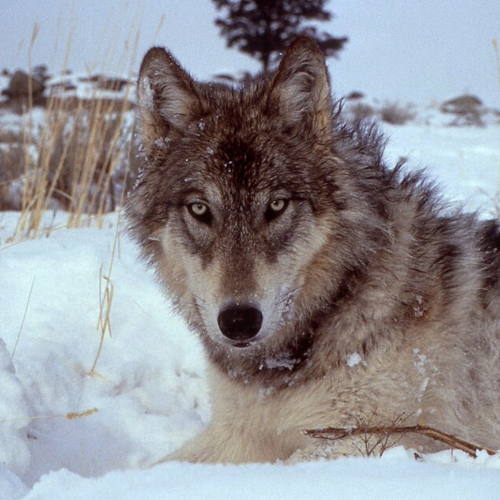
Ecologists monitor individual animals to understand population dynamics and how species affect their environments, and Wolf 8's story is a case study in how one creature's survival can ripple through an entire ecosystem.

The Carnivore Way: Coexisting with and Conserving North America's Predators
Eisenberg, Cristina
Why We Picked It
Career Connection
Ecologists study trophic cascades, the way a predator's presence or absence reshapes everything below it in a food web, and the Yellowstone story running through this book is the field's most powerful demonstration of that foundational ecological principle.