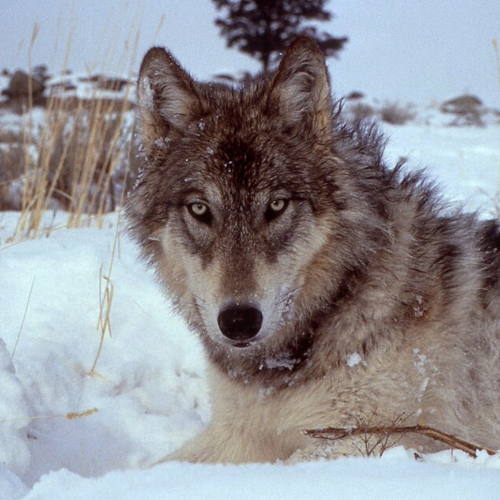
Photo: Doug Smith, Public domain, via Wikimedia Commons
What It Is
In 1995, the U.S. Fish and Wildlife Service released 14 gray wolves from Canada into Yellowstone National Park, beginning one of the most closely studied ecological experiments in history. Wolves had been absent from Yellowstone for nearly 70 years, hunted to local extinction by the 1920s, and the ecosystem had changed dramatically in their absence. Elk herds grazed freely along riverbanks and valley floors, stripping away the willows, aspens, and grasses that once held the soil in place. When the wolves returned, ecologists began tracking something they had not fully anticipated: the changes cascaded far beyond the wolf-elk relationship, reshaping plant communities, riverbanks, beaver populations, songbird diversity, and eventually the physical course of rivers. Scientists call this phenomenon a trophic cascade, and Yellowstone became the most famous example in the world.
Why It Matters
The Yellowstone wolf reintroduction demonstrated, in real time and at a landscape scale, how a single species can determine the health of an entire ecosystem. The project provided ecologists with decades of data on how predator-prey dynamics, vegetation, hydrology, and biodiversity are interconnected in ways no model had fully predicted. It also showed that restoring what has been lost can have effects far beyond anyone's expectations, and that the most important ecological relationships are often invisible until they disappear. For young people interested in ecology, Yellowstone's wolves are a vivid example of why understanding and protecting ecosystems matters, and of how one decision made by scientists and policymakers can change a landscape for generations.