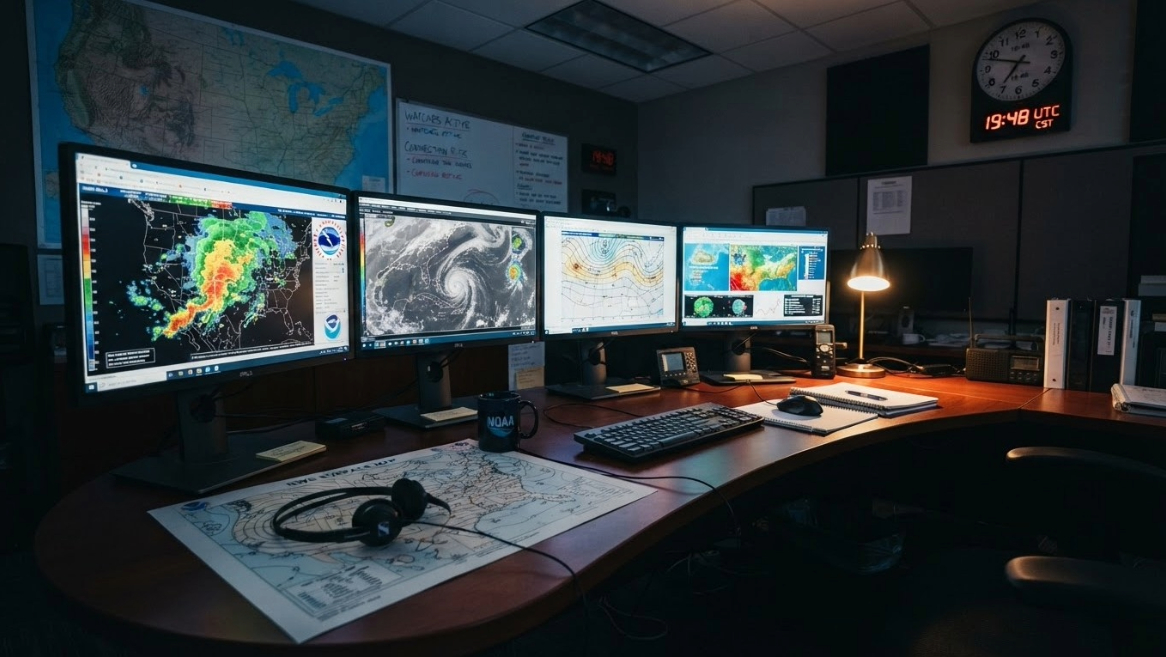
Did You Know?
A single lightning bolt can heat the air around it to about 50,000 degrees Fahrenheit, roughly five times hotter than the surface of the sun.
The Numbers Behind the Career
There were about 10,700 atmospheric scientists and meteorologist working across the United States in 2025.
The median annual salary for atmospheric scientists and meteorologist was $99,070 in 2025.
About 800 positions for atmospheric scientists and meteorologist are expected to open each year over the next decade.
Where This Career Is Headed
Advances in computing power, artificial intelligence, and satellite technology are transforming meteorology. AI-powered weather models now produce forecasts that rival traditional physics-based models, and new satellite systems provide meteorologists with higher-resolution data than ever. At the same time, the increasing frequency of extreme weather events driven by a changing climate is making accurate forecasting and clear public communication more critical than ever. Over the next decade, the meteorologists who thrive will be those who can blend traditional atmospheric science with emerging technology and a commitment to serving the communities that depend on their work.

Advances in AI and machine learning are creating new roles for meteorologists who can develop, train, and interpret next-generation weather prediction models.
Growing demand for climate risk assessment in industries like insurance, agriculture, and urban planning is opening new career paths for meteorologists outside of traditional forecasting.
Expanding satellite networks and improved radar technology give meteorologists more detailed data, enabling more precise, longer-range forecasts than ever before.

Education & Certification
Most meteorologists hold at least a bachelor's degree in atmospheric science, meteorology, or a closely related field like physics or mathematics. Coursework typically includes atmospheric dynamics, thermodynamics, calculus, computer programming, and data analysis. For research or university teaching positions, a master's degree or doctorate is usually required. The federal government, the largest employer of meteorologists, generally requires a bachelor's degree with specific coursework in meteorology and related sciences.
While no single license is required to work as a meteorologist, earning the Certified Broadcast Meteorologist (CBM) seal from the American Meteorological Society is a widely recognized credential for those working in television, and other professional certifications can help meteorologists stand out in a competitive field.
To Prepare...
Focus on math and science courses, especially physics, earth science, and any available classes in environmental or atmospheric science, since these subjects form the core of meteorology.
Start paying close attention to daily weather patterns and practice comparing official forecasts to what actually happens, building the observation skills that meteorologists rely on every day.
Look into summer programs, science camps, or online courses focused on weather and atmospheric science to start building knowledge and experience before college.
Spotlight: Explore the Life of a Meteorologist

National Oceanic and Atmospheric Administration (NOAA)
Learn More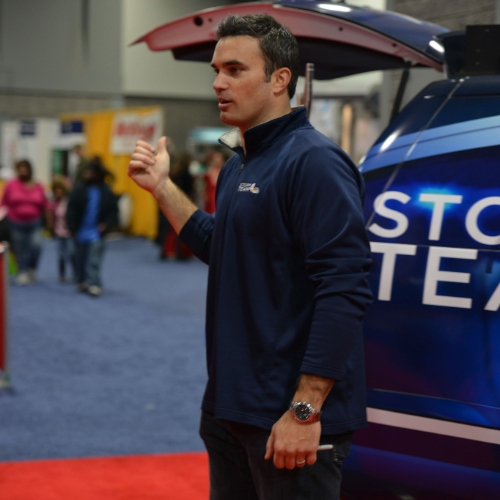
Doug Kammerer
Learn More