
Did You Know?
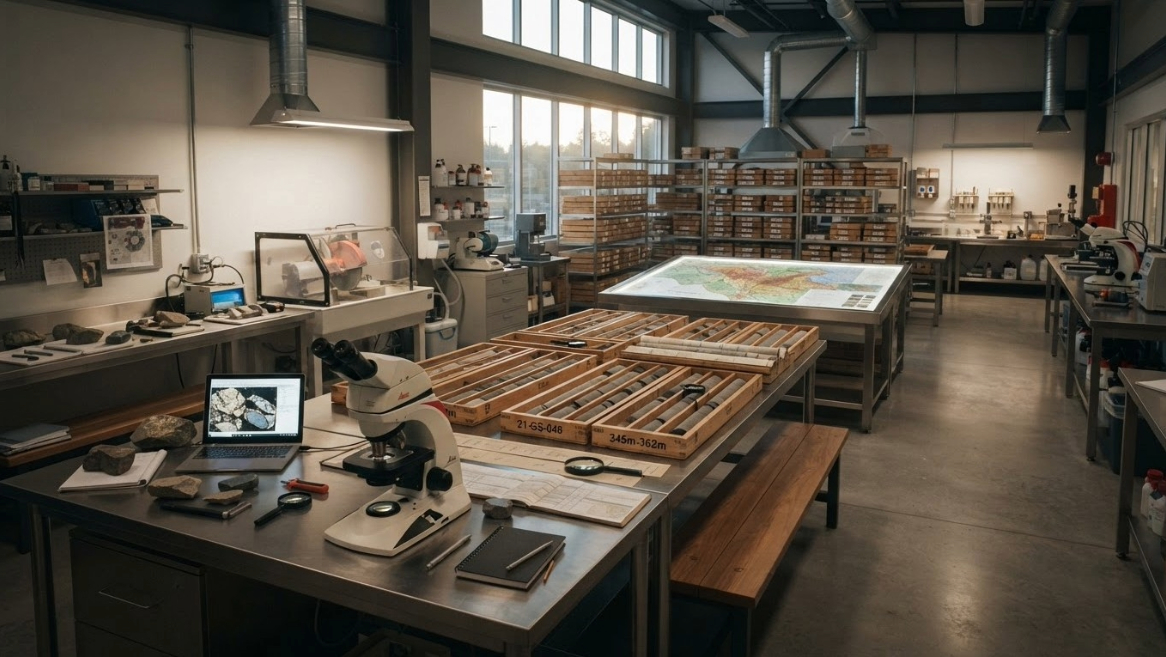
Earthquakes send out a fast, weaker wave before the slower, stronger shaking. In California, Oregon, and Washington, an early warning system uses that head start to send alerts to phones, sometimes seconds before the strong shaking arrives.
How to Get Started
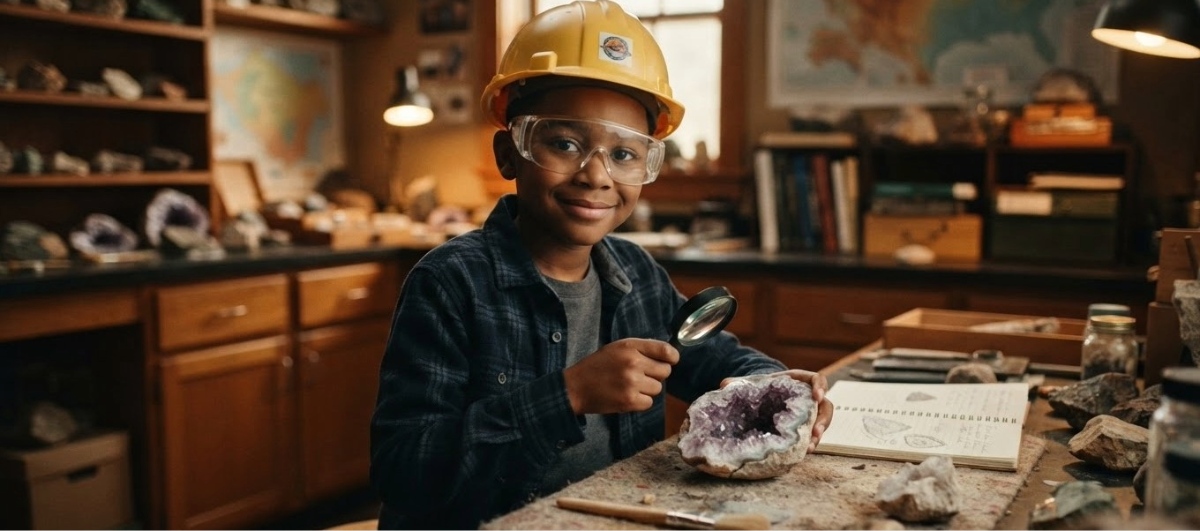
You can start thinking like a geologist with a rock, a notebook, and a question about where it came from. Geologists start by looking closely at small things, like a color, a crack, or a line in a hillside, and build a bigger story from them. Anything you find outside, in a wall, or on a map can be your first clue.
Explore the Basics
With a grown-up, try to scratch a few rocks and everyday objects with your fingernail, then a copper coin, then a steel nail, and make a chart of what scratches what. Try a few things from around the house too, like a piece of chalk, a seashell, and a brick, and see where each one lands on your chart. Compare your chart with a friend’s and see whether you ranked things in the same order.
Try It Out
With a grown-up’s help, shave old crayons of two or three colors into tiny bits, like sand and mud. Pile the bits in layers on a sheet of foil, fold it closed, and press down hard, or even stand on it, to make your own “sedimentary rock.” Then ask the grown-up to warm the packet on the stove over low heat until the bits soften and squish together into “metamorphic rock,” and finally to melt some completely and let it cool into “igneous rock,” since only a grown-up should handle the stove and the hot foil. Draw your crayon rock at each stage and give each step a name.
Join the Community
Visit a rock and mineral display at a science or natural history museum, or a local gem and mineral show, with a family member, and look for a free admission day if there is one. Ask someone there to show you how they test a mineral, and look closely at the labels, which often tell you where each mineral was found and what it is made of. Pick your favorite one and ask what makes it special.