
Did You Know?
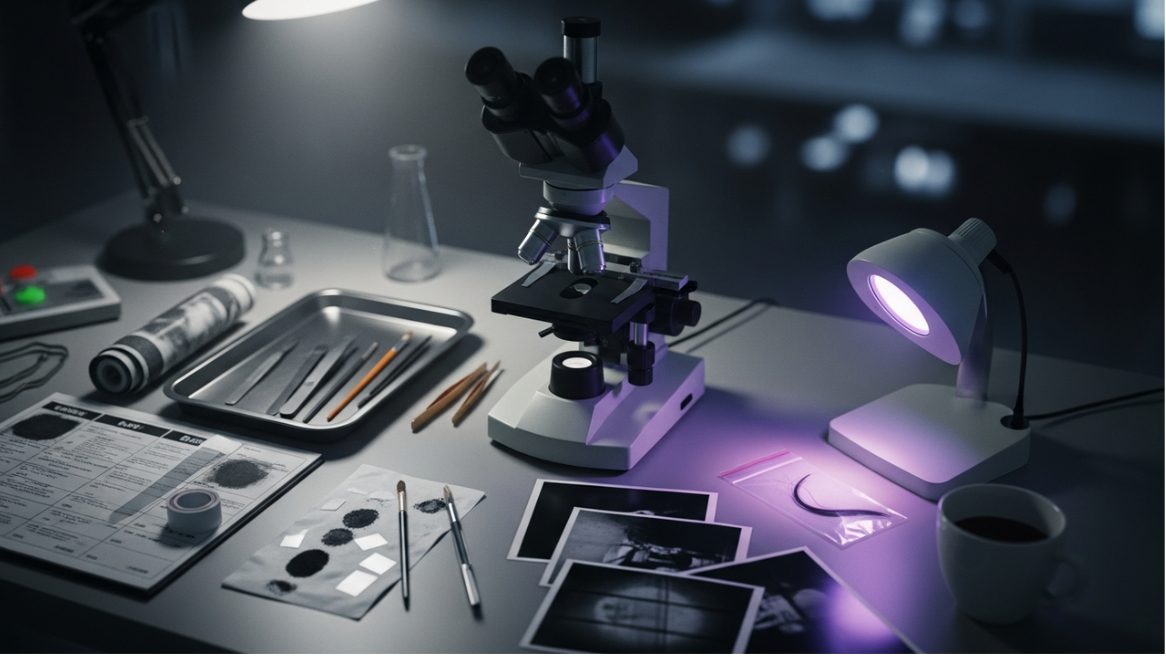
A chemical called luminol glows bright blue when it comes into contact with even tiny traces of blood, even after a surface has been thoroughly scrubbed. Forensic scientists have used luminol to detect blood that is decades old, long after any visible trace has disappeared.

What Forensic Scientists Really Do
Every clue tells a story. A muddy footprint, a fiber caught on a fence, a tiny fleck of paint on a bumper; however, to most people, these things are invisible. To a forensic scientist, they are evidence. Forensic scientists are the people who collect, analyze, and interpret physical clues left behind at a scene to help figure out what happened. They use chemistry, biology, and careful observation to find answers that might otherwise stay hidden, and their work helps make sure the truth comes to light.
Forensic science is a career for people who love puzzles and pay attention to details that others overlook. Some forensic scientists specialize in analyzing fingerprints or DNA. Others study handwriting, chemicals, soil, or even the insects found at a scene. No matter the specialty, the job always starts the same way: look carefully, ask good questions, and let the science lead you to the answer. If you love mysteries, enjoy science experiments, and have a sharp eye for noticing things other people miss, you might already be thinking like a forensic scientist.
You Might Love This If...
Skills That Follow You Everywhere
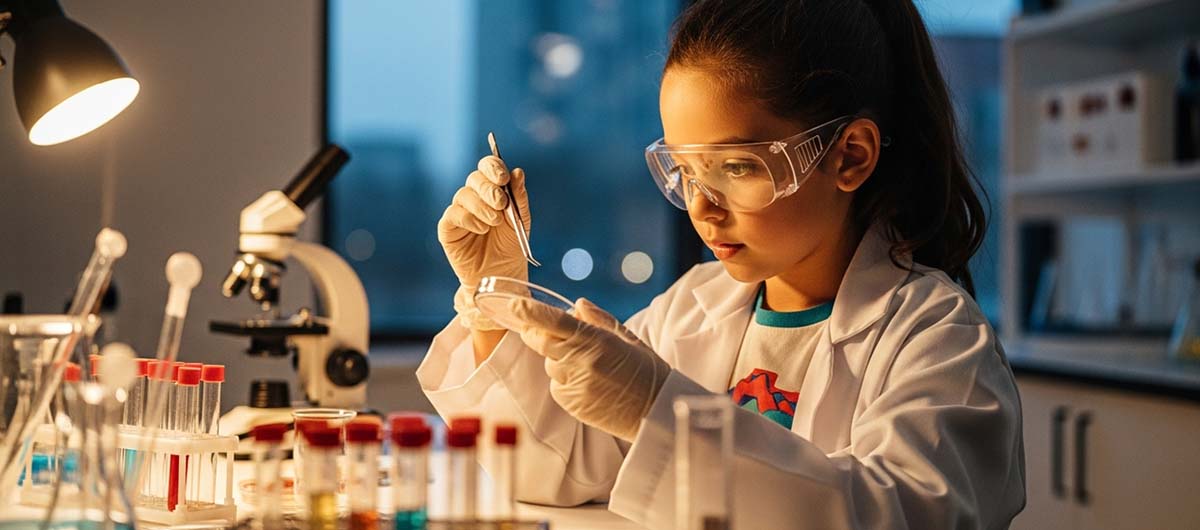
A career in forensic science builds skills that reach far beyond the laboratory. Forensic scientists learn to organize their work with exacting precision, approach complex evidence with methodical problem-solving, and communicate technical findings to audiences who depend on clarity to make consequential decisions. These abilities are valuable in any field where accuracy, analytical thinking, and clear communication are essential.
Problem-Solving
Every piece of evidence a forensic scientist encounters is a question waiting to be answered. An unknown substance, a partial fingerprint, a fiber with no obvious origin, each one requires a methodical approach: form a hypothesis, select the right test, interpret the result, and revise your thinking if the data points somewhere unexpected. Forensic scientists learn to work through complex, layered problems without jumping to conclusions, because in a field where findings can send someone to prison or set them free, the process of reaching an answer matters just as much as the answer itself.
Communication
A forensic scientist's findings are only as useful as their ability to explain them. In the lab, they write detailed technical reports that other scientists can replicate. In the courtroom, they translate the same findings into plain language that a jury with no scientific background can understand and evaluate. Forensic scientists learn to be precise without being inaccessible, confident without overstating what the evidence shows, and clear under cross-examination from attorneys whose job is to challenge every word they say.
Organization
In forensic science, disorganized work is not just inefficient; it can invalidate evidence, compromise an investigation, and undermine the credibility of findings in court. Forensic scientists maintain meticulous records of every sample they handle, every test they run, and every result they document, following strict chain-of-custody protocols that account for the evidence's location at every moment. This habit of systematic, disciplined organization builds a professional standard that transfers directly to any career where the integrity of information matters.
Explore more resources for a future Forensic Scientist

18 Tiny Deaths: The Untold Story of the Woman Who Invented Modern Forensics (Historical Medical Science and True Crime Book for Adults)
Goldfarb, Bruce
Why We Picked It
Career Connection
Modern forensic scientists owe their core methods, the systematic approach to crime scene evidence, to Lee's foundational work, and understanding her life means understanding where the discipline's most essential philosophy actually came from.

You Be The Jury
Miller, Marvin
Why We Picked It
Career Connection
Forensic scientists provide the physical evidence that juries rely on to reach just verdicts, and sitting in the jury seat builds the same evidence-based, critical-thinking mindset that makes forensic work meaningful in the real world.

Actual Innocence: When Justice Goes Wrong and How to Make it Right
Scheck, Barry | Neufeld, Peter | Dwyer, Jim
Why We Picked It
Career Connection
Forensic scientists provide the physical truth that the justice system depends on, and this book demonstrates with painful clarity what happens when that evidence is corrupted, and what it means when science is finally applied correctly to restore it.