
Did You Know?
Every bird you see is a living dinosaur. Scientists classify birds as the last surviving branch of the dinosaur family tree, which means the pigeons in a parking lot are more closely related to T. rex than any lizard alive today.
What Paleontologists Really Do
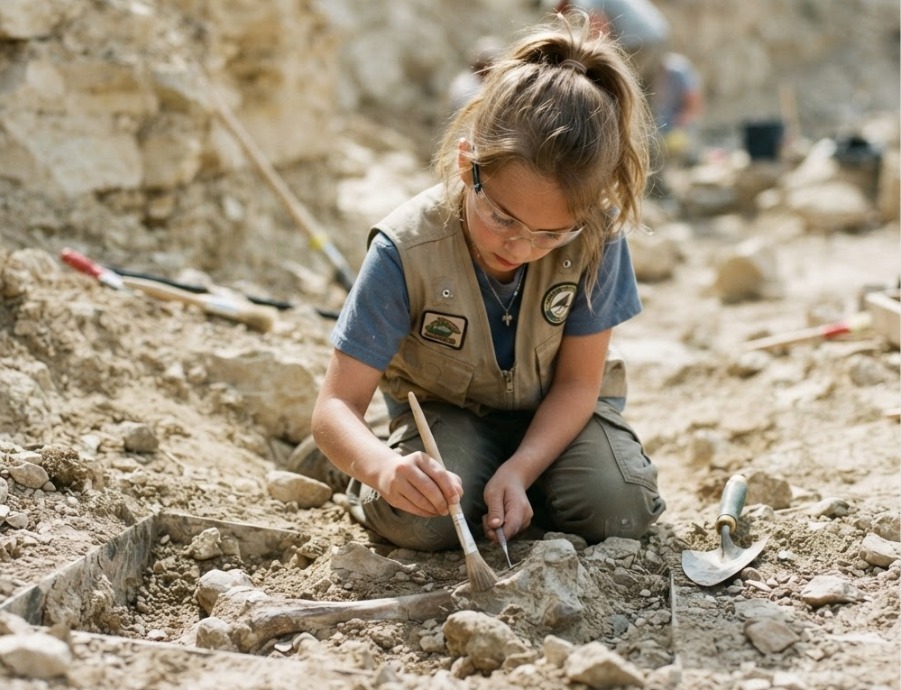
Imagine kneeling in warm dirt under a bright sun, brushing away sand with a tiny paintbrush, when suddenly you spot the curve of a giant bone that no human has ever touched. That is what it feels like to be a paleontologist, a scientist who digs up and studies fossils, the preserved remains of animals and plants that lived millions of years ago. Paleontologists use fossils like puzzle pieces to figure out what ancient creatures looked like, how they moved, and what they ate for lunch (a very, very long-ago lunch). Some paleontologists study dinosaurs, while others study ancient sea creatures, early mammals, or even tiny prehistoric bugs frozen in amber. Every fossil is a clue in a giant mystery about life on Earth long before people ever existed.
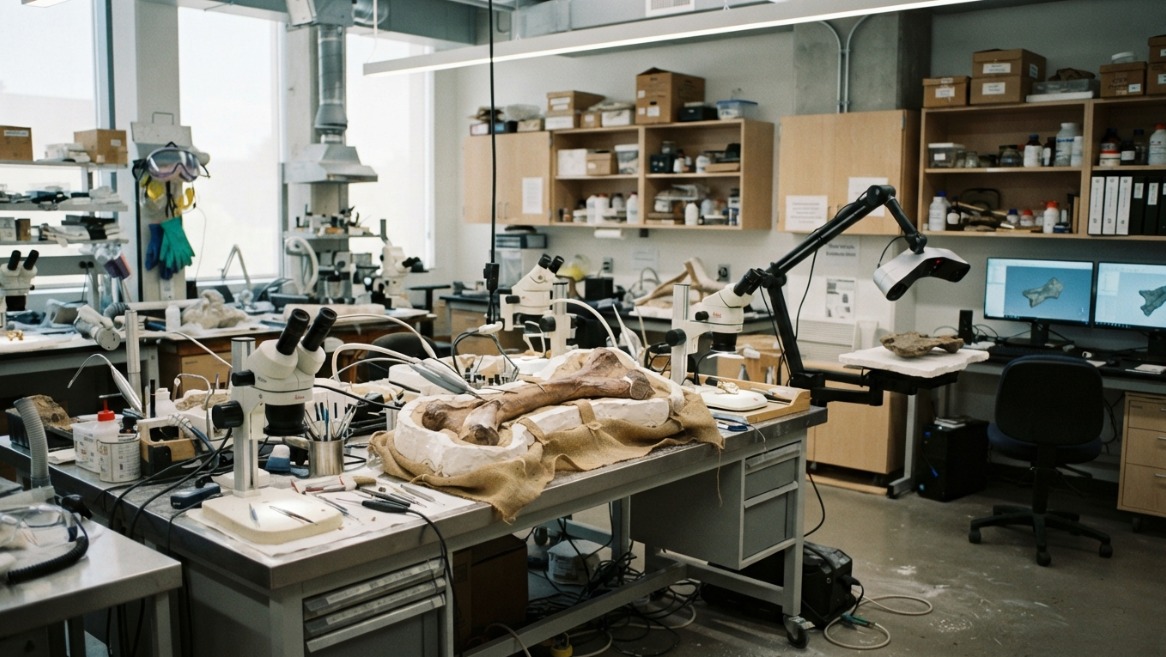
Paleontologists spend part of their time outside, carefully digging through rock and dirt, and part of their time inside labs, cleaning bones and fitting skeletons together like enormous three-dimensional puzzles. The work takes patience, sharp eyes, and a love of mystery-solving, since most fossils come out of the ground broken, dirty, and missing pieces. If you love dinosaurs and other ancient creatures, enjoy digging in dirt or sand, and get excited imagining what the world looked like before humans, you might already be thinking like a paleontologist.
You Might Love This If...
Skills That Follow You Everywhere
Pursuing a career as a paleontologist builds skills that matter far beyond the dig site. Future paleontologists learn to think critically about incomplete evidence, stay resilient through years of painstaking work, and communicate complex discoveries in ways that spark wonder in others. These abilities matter far beyond the dig site.
Critical Thinking
Paleontologists rarely find a complete skeleton. Most of the time, they have a handful of broken, scattered bones. They must use careful reasoning, comparisons with living animals, and scientific evidence to determine what the entire creature looked like and how it behaved. This kind of clear-eyed, evidence-based thinking, drawing solid conclusions from limited information rather than guessing, is a skill that pays off in nearly every field.
Resilience
A dig can go for weeks without turning up a single meaningful fossil, and even a promising excavation can be undone by weather, erosion, or a wrong turn of the pick. Paleontologists learn to keep showing up, stay motivated through slow seasons, and treat setbacks as part of the process rather than a reason to quit. That kind of persistence carries directly into any pursuit where success takes longer than you would like.
Communication
A fossil discovery does not matter much if no one understands why it is important. Paleontologists write scientific papers for other researchers, but they also explain their discoveries to museum visitors, journalists, and curious kids, translating complex science into stories that make people care about creatures that died out millions of years ago. Learning to explain something complicated in a way that excites other people is a skill useful in almost any career.