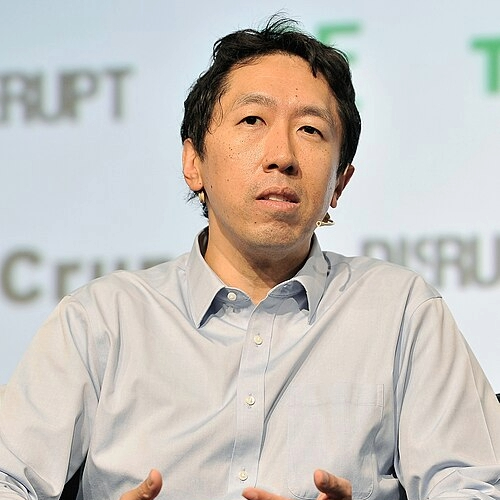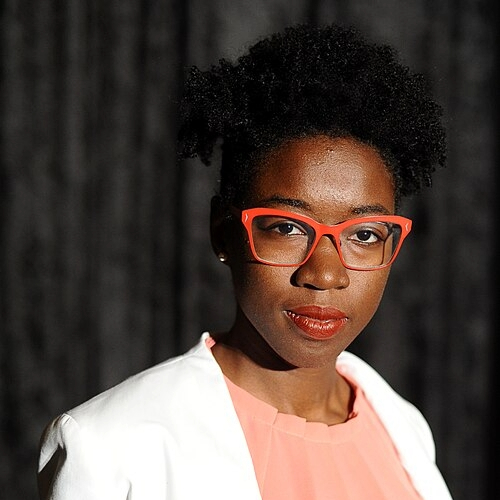
Photo: Jérémy Barande, CC BY-SA 2.0 <https://creativecommons.org/licenses/by-sa/2.0>, via Wikimedia Commons
Who He Is
Yann LeCun grew up in the suburbs of Paris and developed an early obsession with how the human brain processes information, which eventually led him to ask whether a machine could be taught to see. He earned his PhD from Université Pierre et Marie Curie and went on to conduct foundational research at Bell Labs, where, in the late 1980s, he developed convolutional neural networks, a type of machine learning architecture directly inspired by the structure of the visual cortex. His system, called LeNet, could read handwritten digits reliably enough that it was deployed by the U.S. Postal Service and banks to process checks and zip codes, becoming one of the first machine learning models to work at real commercial scale. He later joined New York University as a professor and became the founding director of Meta AI Research, one of the world's largest industrial machine learning research and engineering organizations. In 2018, he shared the Turing Award, often called the Nobel Prize of computing, with Geoffrey Hinton and Yoshua Bengio for their work on deep learning.
Why He Matters
The image recognition systems that power face detection, medical imaging tools, self-driving car cameras, and photo search all descend directly from the architecture LeCun developed at Bell Labs in the 1980s. What makes his story particularly useful for anyone thinking about machine learning engineering is that his breakthrough was not just theoretical -- it was built to solve a practical problem and deployed in a real system handling millions of transactions. He has always insisted that the measure of a machine learning system is not how elegant it is on paper but whether it works reliably in the world, which is exactly the standard to which machine learning engineers are held every day. His career spans the full arc of the field, from decades of work that most of the scientific community dismissed to watching the techniques he championed become the foundation of a global industry. For anyone drawn to building systems that actually work, LeCun's path from curious student to field-defining engineer is worth knowing.