Photo: Michael Major for Crop Trust, CC BY-SA 2.0 <https://creativecommons.org/licenses/by-sa/2.0>, via Wikimedia Commons
What It Is
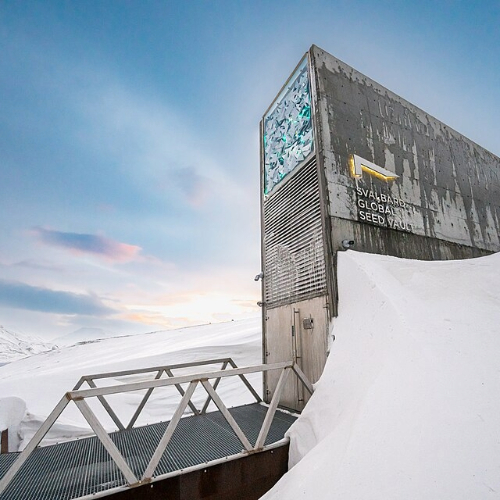
Buried deep inside a mountain on a remote Norwegian Arctic island, the Svalbard Global Seed Vault is one of the most extraordinary facilities on Earth. Opened in 2008 and maintained at minus 18 degrees Celsius, it stores backup copies of more than 1.3 million distinct crop seed varieties from nearly every country in the world, serving as a last resort against the loss of agricultural biodiversity due to war, natural disasters, or climate change. The vault was designed by agronomists, seed scientists, and conservation specialists who recognized that the genetic diversity stored in the world's seed banks was irreplaceable and dangerously vulnerable. It was used once in 2015, when the International Center for Agricultural Research in the Dry Areas withdrew seeds after its Syrian facility was damaged by the civil war. The vault is sometimes called the Doomsday Vault, but its creators prefer to think of it as an insurance policy for the future of food.
Why It Matters
The Svalbard Seed Vault exists because agronomists understand something most people never think about: the crop varieties we depend on for food are disappearing. As industrial agriculture has narrowed the range of plants grown at a commercial scale, thousands of traditional varieties with unique traits, including drought resistance, pest tolerance, and nutritional properties, have been lost forever. The vault represents the agronomic community's commitment to preserving options for future generations, ensuring that scientists and farmers decades from now will have the genetic raw material to develop crops suited to conditions we cannot yet predict. For young people, it is a vivid reminder that protecting the diversity of life on Earth is not just an ecological concern. It is a practical prerequisite for feeding the future.