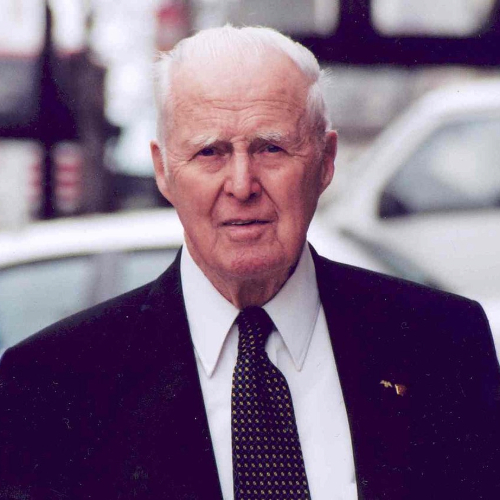
Photo: Ben Zinner, USAID, Public domain, via Wikimedia Commons
Who He Is
Norman Borlaug was an American agronomist and humanitarian who is credited with saving more human lives than any other person in history. Born in Iowa in 1914, Borlaug spent decades working in Mexico, South Asia, and Africa developing high-yield, disease-resistant dwarf wheat varieties that could thrive in difficult growing conditions. His work in the 1940s through 1960s triggered what became known as the Green Revolution, a period of dramatic agricultural productivity growth that prevented widespread famine across South Asia and Latin America at a time when population growth was outpacing food supply. He was awarded the Nobel Peace Prize in 1970, the Presidential Medal of Freedom, and the Congressional Gold Medal, making him one of only seven people in history to receive all three. Borlaug spent the final decades of his life advocating for science-based approaches to feeding the world's poorest populations.
Why He Matters
Norman Borlaug's career is the most powerful demonstration in history of what agronomy can accomplish. At a time when experts were predicting global-scale mass starvation, he and his colleagues developed practical scientific solutions that changed the trajectory of human civilization. His story shows that working in fields and laboratories, far from the spotlight, can have consequences that dwarf almost any other kind of human achievement. For young people considering a career in agronomy, Borlaug is proof that this career sits at the intersection of science, compassion, and world-changing impact.