Photo: Lydia Fizz from Vancouver, Canada, CC BY 2.0 <https://creativecommons.org/licenses/by/2.0>, via Wikimedia Commons
What It Is
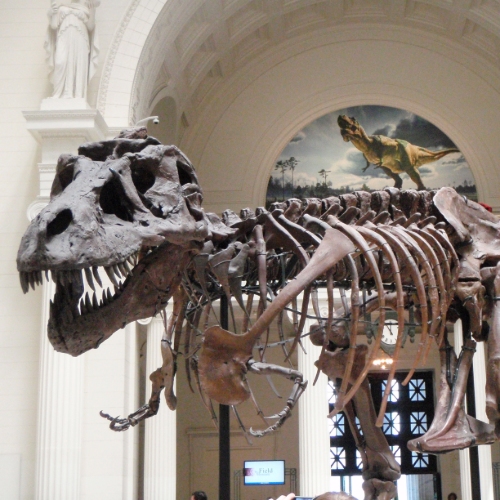
Sue is the nickname for the most complete Tyrannosaurus rex skeleton ever discovered, and one of the largest. Fossil hunter Sue Hendrickson found it in South Dakota in 1990, after whom the skeleton is named. At about 90 percent complete, Sue's skeleton gave paleontologists an unprecedented picture of what a T. rex actually looked like, down to details like healed injuries and evidence of diseases the animal survived during its life. The fossil sparked a legal battle over ownership among the landowner, the excavation team, and the U.S. government. It was eventually sold at a public auction in 1997 for about $8.4 million, a record price for a fossil at the time. Sue now stands on permanent display at the Field Museum in Chicago, where millions of visitors have come face-to-face with one of the most famous dinosaurs on Earth.
Why It Matters
Sue matters because a single, remarkably complete skeleton can answer scientific questions that dozens of partial specimens cannot, from how fast T. rex could move to what illnesses and injuries it survived. The very public legal fight and record-breaking auction also sparked national conversations about who owns fossils, how to protect scientific discoveries, and why museums matter as places where the public can see scientific treasures up close. For young people, Sue reminds us that a single fossil, carefully dug from the ground by someone paying close attention, can become one of the most studied and visited scientific specimens in the world.