Photo: Carbonmoon, CC BY-SA 4.0 <https://creativecommons.org/licenses/by-sa/4.0>, via Wikimedia Commons
Who She Was
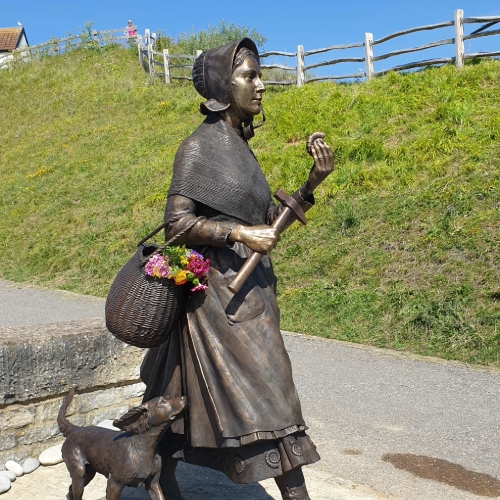
Mary Anning was a self-taught British fossil collector and paleontologist who, starting as a child in the early 1800s, discovered some of the most important fossils in scientific history along the cliffs of Lyme Regis, England. Born in 1799 to a low-income family, Anning had almost no formal education, but she developed extraordinary skill at spotting and carefully excavating fossils from dangerous, crumbling cliffside rock. As a child, she and her brother Joseph uncovered the first ichthyosaur skeleton to be correctly identified by scientists, and she later discovered the first two plesiosaur skeletons ever found and one of the earliest pterosaur fossils outside Germany. Despite her groundbreaking discoveries, Anning was excluded from the scientific societies of her time simply because she was a woman from a low-income family, and male scientists often bought her fossils and published findings without giving her proper credit.
Why She Matters
Mary Anning's discoveries provided crucial early evidence that species could go extinct and that Earth's history stretched far further back than most people of her time believed, ideas that helped lay the groundwork for later breakthroughs such as the theory of evolution. Her story matters today because it shows that scientific talent has nothing to do with wealth, gender, or formal schooling, and that some of history's most important discoveries came from someone who, for most of her life, was denied the recognition she deserved. Modern paleontologists and historians have worked to correct the record, and Anning is now celebrated as one of the field's founders.