Photo: Meridas (Vladimír Socha), CC BY-SA 4.0 <https://creativecommons.org/licenses/by-sa/4.0>, via Wikimedia Commons
Who She Was
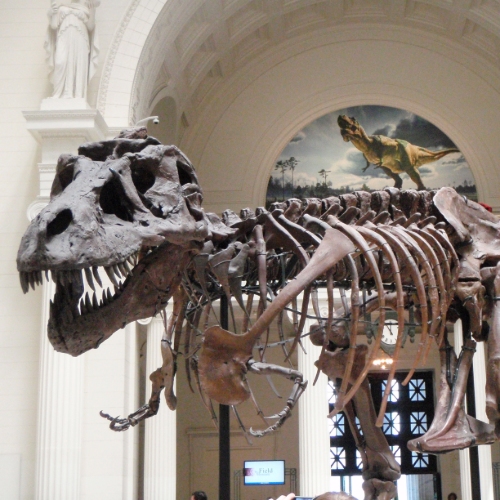
Mary Schweitzer is an American paleontologist and molecular biologist best known for a discovery that stunned the scientific world: soft, flexible tissue preserved inside the leg bone of a 68-million-year-old Tyrannosaurus rex. Schweitzer came to paleontology later than most, earning her Ph.D. in 1995, nearly two decades after finishing college and after raising three children. She spent most of her career at North Carolina State University, where her lab studied fossils at the molecular level, and she is now a professor emerita there. When she first found what looked like blood vessels and possible cells inside the dinosaur bone in 2005, many scientists doubted something so fragile could survive that long, and her findings faced years of scrutiny before further discoveries and improved lab techniques confirmed her results. Schweitzer has since found similar preserved material in other dinosaur fossils, helping build an entirely new field of research into ancient biology.
Why She Matters
Mary Schweitzer's work proved that fossils can preserve far more than just bone shape, opening the door to studying the actual biology, and possibly even proteins, of animals that died tens of millions of years ago. Her discovery forced paleontologists to rethink what fossils could reveal and pushed the field toward the molecular and chemical analyses transforming paleontology today. Her path into science, starting a Ph.D. later in life after doubting she belonged in a lab at all, is also a powerful reminder that meaningful scientific contributions do not have to follow a straight or early timeline.