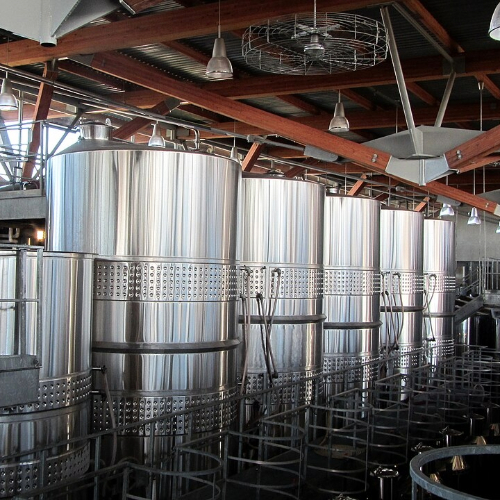
Photo: Loozrboy from Toronto, Canada, CC BY-SA 2.0 <https://creativecommons.org/licenses/by-sa/2.0>, via Wikimedia Commons
What It Is
Fermentation is one of the oldest and most important food technologies in history. Long before anyone understood the science behind it, people around the world discovered that certain foods could be transformed by leaving them in the right conditions for the right amount of time. The ancient Egyptians used fermentation to make bread and beer more than 5,000 years ago. Chinese communities fermented soybeans into early forms of soy sauce and miso around the same period. The process works because of microorganisms, tiny living things like yeast and bacteria that are invisible to the naked eye. When yeast feeds on sugar, it produces carbon dioxide gas and alcohol. That is why bread dough rises and why grape juice can turn into wine. When certain bacteria feed on sugars in vegetables or dairy, they produce lactic acid, which preserves the food and gives it a tangy flavor. This is how cabbage becomes sauerkraut, cucumbers turn into pickles, and milk becomes yogurt or cheese. Nearly every culture on Earth developed its own fermented foods: Korean kimchi, Japanese miso, Turkish kefir, Ethiopian injera, German sauerkraut, and Mexican tepache, to name just a few.
Why It Matters
Fermentation is at the intersection of ancient tradition and modern science, making it one of the most exciting fields in food science today. Throughout most of human history, fermentation was a method to preserve food before the advent of refrigeration. However, modern food scientists have found that fermentation does much more than prevent spoilage. It can improve nutrient absorption, produce beneficial bacteria (called probiotics) that support gut health, and develop complex flavors that can't be achieved in any other way. Recently, fermentation has become a key part of some of the world's most innovative food technologies. For instance, the Impossible Burger uses fermentation to produce heme, the molecule responsible for its meaty flavor and color. Pharmaceutical companies employ fermentation to produce antibiotics like penicillin, and food producers use it to create vitamins, enzymes, and natural food colorings. Scientists are even investigating how fermentation could help solve global food security issues by transforming agricultural waste into protein-rich food sources. The same basic process that an ancient Egyptian baker used to make bread rise is now helping scientists shape the future of food.