Photo: USDAgov, Public domain, via Wikimedia Commons
Who He Was
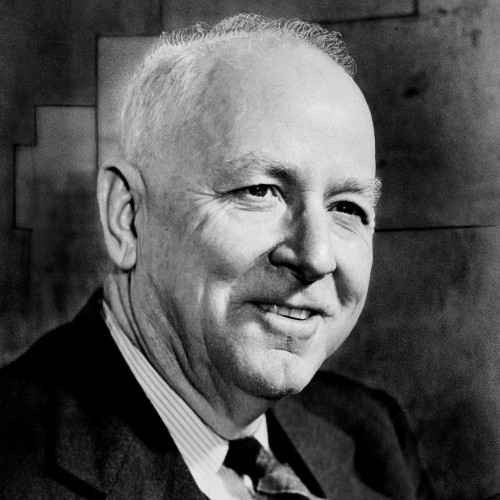
Hugh Hammond Bennett was born near Wadesboro, North Carolina, graduated from the University of North Carolina, and began his career as a USDA soil surveyor. While investigating declining crop yields across the South, he became convinced that soil erosion was not just a farming problem but a threat to entire rural economies. He spent the 1920s writing and speaking about the issue, most notably in a 1928 USDA publication called Soil Erosion: A National Menace, and his advocacy helped convince Congress to fund the country's first soil erosion experiment stations in 1930. In spring 1935, Bennett testified before a congressional committee on the bill that would create a permanent soil conservation agency when a dust storm from the Great Plains rolled over Washington, D.C. According to a 1950 biography, he knew the storm was coming and kept talking until it darkened the windows, letting lawmakers see the crisis for themselves. That same year, the Soil Conservation Act created the Soil Conservation Service, now the Natural Resources Conservation Service, with Bennett serving as its first chief until his retirement in 1951.
Why He Matters
Bennett turned soil erosion from something barely anyone discussed into a problem the entire federal government organized itself around solving. A contemporary once said he "combined science with showmanship," and that combination, using dramatic public moments alongside years of careful scientific research, is exactly what allowed him to convince a skeptical Congress to act. He also helped establish a model built on local conservation districts working in partnership with federal science and state support, a structure that still governs how farmers and landowners get conservation assistance today, nearly a century later. His persistence shows that solving a national crisis often requires both solid evidence and the ability to make that evidence impossible to ignore at exactly the right moment. He proves that one person's sustained advocacy can permanently reshape how an entire country manages its land.