
Did You Know?
Environmental scientists have used tree rings to uncover evidence of droughts, floods, and wildfires from hundreds or even thousands of years ago.
What Environmental Scientists Really Do
You are walking along a creek near your home with a small net and a clear jar. You dip the net into the water and pull out a tiny creature with legs and gills. You carefully place it in the jar, watch it swim, and wonder what it is and what it tells you about the health of the creek. Later, you discover it is a mayfly larva, and its presence means the water is clean enough to support life. You just did what environmental scientists do: you observed nature closely, collected evidence, and learned something important about the world around you.
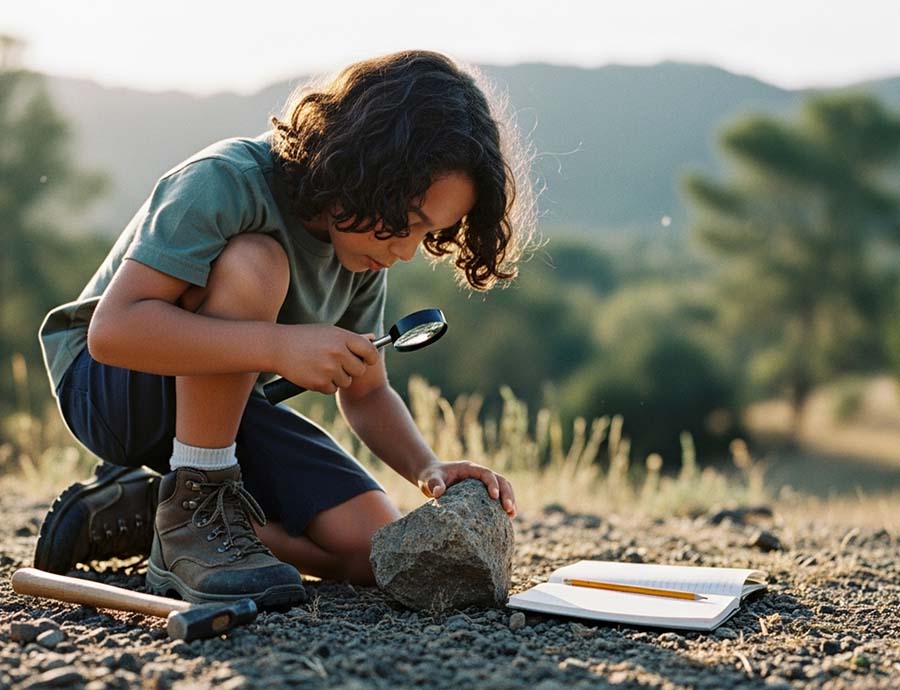
Becoming an environmental scientist starts with noticing things. Why does the air smell different after rain? Where do birds go in winter? What happens to the water that flows down the storm drain? Environmental scientists ask these questions and then go looking for answers. They explore forests, rivers, and beaches. They test water and soil. They count animals and measure changes over time. If you love being outside, discovering how nature works, and helping protect the Earth, you are already thinking like an environmental scientist.
You Might Love This If...

Skills That Follow You Everywhere
Being an environmental scientist develops skills that reach far beyond studying the environment. Environmental scientists learn to analyze complex systems, adapt to changing conditions, and communicate findings to diverse audiences. These abilities prove valuable in any field that requires careful thinking, collaboration, and evidence-based decision-making.
Critical Thinking
Environmental scientists face layered problems like understanding why a species population is declining or how pollution moves through a watershed. They gather evidence, ask probing questions, and consider multiple explanations before reaching conclusions. This habit of studying all the clues before taking action builds a mindset that strengthens decision-making in any field.
Adaptability
Field conditions shift constantly as weather changes, equipment malfunctions, and new data emerges that challenges earlier findings. Environmental scientists adjust their methods on the fly, stay focused despite uncertainty, and grow more flexible with each new ecosystem or challenge they encounter. This ability to pivot when circumstances change proves valuable in any professional setting.
Communication
Environmental scientists translate complex research for community meetings, policy reports, and collaborative projects with professionals from other fields. They learn to present technical information in accessible language while also listening carefully to understand others' perspectives and concerns. Strong communication turns scientific knowledge into action that benefits both people and the planet.
Explore more resources for a future Environmental Scientist

Compost Stew: An A to Z Recipe for the Earth
Mary McKenna Siddals
Why We Picked It
Career Connection
Soil scientists study nutrient cycling and organic decomposition to improve agricultural sustainability, and composting is one of the most accessible entry points into that professional field.

What If There Were No Bees?: A Book About the Grassland Ecosystem (Food Chain Reactions)
Suzanne Slade
Why We Picked It
Career Connection
Ecologists study food web dynamics and keystone species to predict what happens when populations decline, and this book introduces the same systems-level cause-and-effect thinking those scientists use.

Wangari's Trees of Peace: A True Story from Africa
Jeanette Winter
Why We Picked It
Career Connection
Environmental scientists design and lead reforestation and land-restoration projects, and Maathai's Green Belt Movement is a real-world example of the large-scale conservation work the field involves.