
Did You Know?
Ancient Egyptians practiced dentistry as early as 3,000 BCE, using small flint drills to treat tooth pain.
What Dentists Really Do
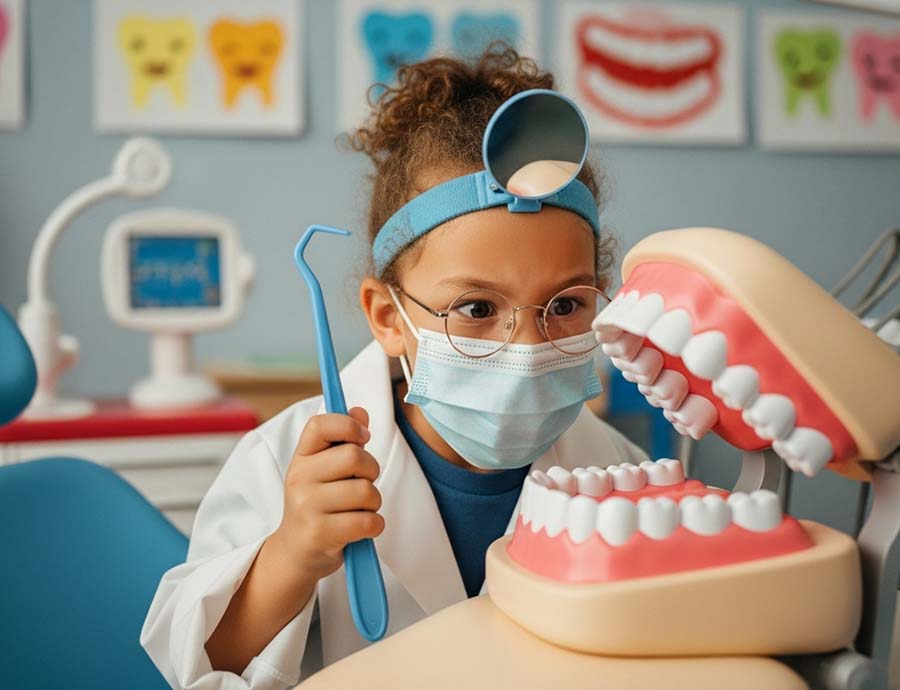
Open wide! Inside your mouth is a set of tools you use every single day: to bite into an apple, to smile at your best friend, and to say every single word you speak. Your teeth are remarkable, and the person who keeps them strong and healthy is your dentist. Dentists are doctors who specialize in the mouth, examining teeth and gums, fixing problems before they get worse, and making sure every smile is as healthy as possible. They use tiny mirrors, gentle lights, and clever tools to explore a world that most people only see when they look in the mirror, open up, and say, “Ahhh.”
Being a dentist means being part detective, part artist, and part scientist all at once. They look for clues in your mouth that tell a story about your health, carefully repair damage with precision tools, and sometimes build entirely new teeth from scratch. If you enjoy puzzles, like helping people feel better, and are curious about how the body works, you might already be thinking the way a dentist thinks.
You Might Love This If...
Skills That Follow You Everywhere
Dentistry builds skills that reach far beyond the dental chair. Dentists learn to communicate complex information in ways patients can understand, solve unexpected problems in real time, and stay focused and precise even when the work is challenging. These abilities serve well in any career involving science, leadership, or direct work with people.
Critical Thinking
Every patient who walks into a dental office presents a unique set of circumstances. A dentist must look at X-rays, evaluate symptoms, consider a patient's medical history, and determine the best course of action, often when multiple approaches are possible. Critical thinking means asking the right questions, weighing the evidence carefully, and making decisions that are grounded in science and right for that specific person. Getting it right matters because the consequences of a missed diagnosis or a poorly chosen treatment are real and lasting.
Teamwork
A dental office runs on coordination. While the dentist leads the clinical work, dental hygienists, assistants, and lab technicians are all essential parts of every patient's care. An assistant anticipates the next instrument before it is asked for, a hygienist shares observations from a cleaning that shape the dentist's diagnosis, and a lab technician crafts a crown to exact specifications based on the dentist's instructions. When everyone communicates clearly and trusts each other's expertise, the whole appointment runs smoothly, and the patient barely notices the effort behind it. Learning to work as part of a team where every role matters is one of the most important things a dentist develops, and one of the most valuable skills they carry into any room.
Empathy
Many people arrive at a dental appointment afraid of what could happen. Empathy is the ability to recognize that fear, take it seriously, and respond in a way that puts the person first. Dentists who practice empathy create an environment where patients trust them, follow through on treatment, and actually take care of their oral health between visits. Beyond easing anxiety, empathy shapes how dentists make decisions: not just what is clinically correct, but what is right for this person, in this situation, at this moment in their life.
Explore more resources for a future Dentist

Dr. Ben's Dental Notebook: A Collection of Dental Illustrations, Handouts and Diagrams
Magleby, Dr. Ben
Why We Picked It
Career Connection
Dentists apply detailed anatomical knowledge every time they examine a patient, diagnose a problem, or plan a treatment, and this illustrated reference introduces the clinical framework that real dental education is built upon.

Dr. Ben's Dental Guide: A Visual Reference to Teeth, Dental Conditions and Treatment
Magleby, Dr. Ben
Why We Picked It
Career Connection
Dentists manage practices, lead clinical teams, and navigate the financial and professional realities of running a healthcare business alongside their patient work, and this book addresses all of it with the directness only experience can provide.

Future in Smiles: A Kids Guide to Becoming a Dentist (Careers for Kids)
Michaels, Sarah
Why We Picked It
Career Connection
Dentists combine deep anatomical knowledge with precise clinical technique and genuine patient connection, and this guide gives middle-schoolers a preview of how all three come together in the daily practice of a working dentist.